New Ski, New Systems

New Ski, New Systems
Thursday, April 11, 2013
One of the things that always excites me most about heading out on another adventure is the new terrain and challenges that will be faced. With every trip the end goal is to learn something new and see something new. The premise of the Tahoe - Whitney ski traverse is to see the Sierra in a new light and to also try a different mode of long distance travel. Both of these goals will help fuel the skill sets required for future trips.
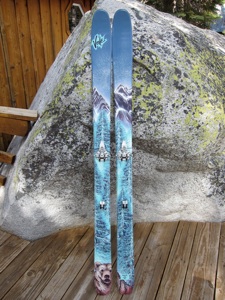
The planner in me always enjoys the added benefit of figuring out the logistics and gear of each new trip. This time around it focused heavy on the requisite ski gear we would need in order to maximize efficiency and minimize weight. Could we apply the same ultra-light ethos to ski-touring? Trauma and I discussed at length the possibility of using skinny skate skis, traditional alpine touring set-ups, snowshoes (gasp!) and even funky skiboards like these. Then there were the offshoot discussions around boots, bindings, and avalanche safety. The dilemma was what would be fast on the way down as well as the way up? What would be the most comfortable, most efficient, offer the most durability, cater to all conditions and most importantly, minimize the weight on our feet? What we settled on was a set-up in the emerging world of rando-racing. Skate skis would sink through fresh powder, snowshoes are a one speed machine, up or down, and skiboards, well they’re just too funky.
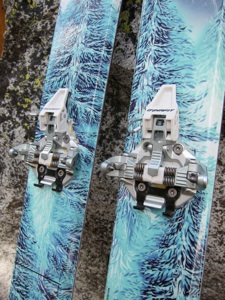
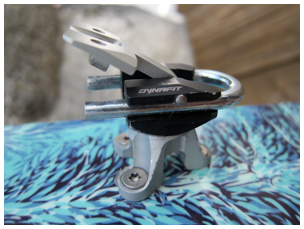
Where rando gear really shines is minimizing weight on the ups and adding confidence on the downs. Having your cake and eating it per-say. Think of it as an alpine-touring ski on steroids, er, rather an anorexic diet, um yeah. Dynafit bindings have long been the gold standard in the alpine touring world, but now with the introduction of even lighter rando tech binding, it’s not a matter of shaving grams or even ounces off a traditional ski binding, but rather pounds in some scenarios!
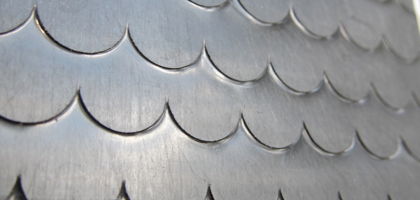
One draw back in years past with alpine touring gear is the amount of time it takes to transition from up to down, or visa versa. If you’re smooth with this transition it can take as little as a minute or two, namely ripping off skins, locking heels, adjusting buckles and stowing skins. But what if you are in rolling terrain and it’s 100yds of up, then 100yds of down, etc, etc. Voile was smart enough to take nordic ski technology and apply it to fat downhill skis with the addition of patterned bases, commonly called fish scales. By setting a conservative skin track of roughly 20 degrees or less, the Voile Vecter BC skis that we will be using can grip on the up and slide on down. Brilliant.
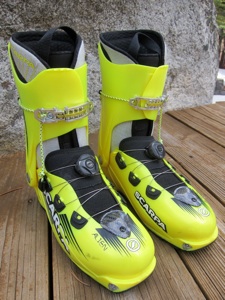
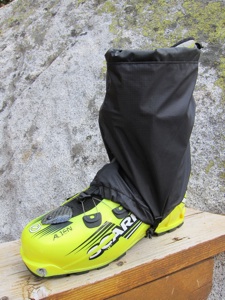
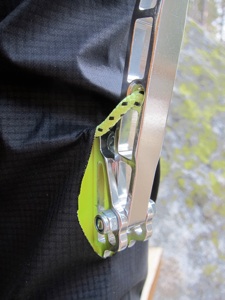
The last piece of the equation is in the order of boots. Scarpa just recently introduced their version of an affordable (re: not $3000) rando boot with the advent of their Alien line. In comparison to even a moderately light alpine touring boot, these things are like slippers. I thought my Maestrales were light at 3lb 12oz when I bought them last season. The Aliens are over half the weight at only 29oz. I’ve worn full leather hiking boots that have weighted more! With a fit more akin to trail runners in touring mode, with the flip of a lever you are effortlessly into a secure and stable ski mode without the need to fumble with buckles and power straps. While rando boots are mostly intended for done in a day ski racing, one thing I needed to figure out was how to keep the liners dry with so much of it exposed to the conditions? Scarpa supplies a lycra ‘gaiter’ that is meant to keep out most of the moisture, but I found it too finicky to put on and remove. I found a solution with a pair of MLD’s SuperLight gaiters with a few modifications to sync better with the mechanics of the Aliens. A match made in heaven.
Another new system that I will be trying out with this trip in around stoves, particularly the lack there of. Homemade alcohol stoves have long been the main stay of my cooking source. They are light, cheap and efficient. One thing I have been thinking on lately is the efficiency of the system when areas become more remote, fuel more scarce and pack weight increases due to the amount of food needing to be carried. It got me thinking about using wood as a fuel source. No longer would I have to tote fuel when it’s already on the ground, nor would I have to stress over properly rationing my supplies. Crossing the Sierra in winter means very little in the way of easy resupplies. There is not a single road open between Hwy 50 in South Lake Tahoe and Kennedy Meadows. That’s about 350mi of wilderness terrain! Of the roughly 250mi we’ll be covering, we plan on doing one resupply in Mammoth Lakes about half way through. That’s a lot of fuel needs, especially at elevation in the early season, with the potential need to melt snow! Enter Trail Design’s Ti-Tri Sidewinder.
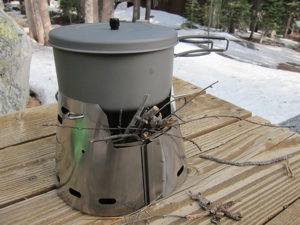
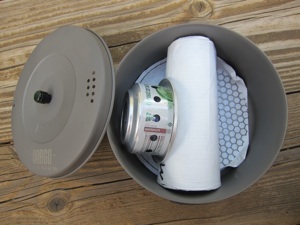
Vargo also stepped up to the plate and supplied one of their 1.3Ti pots for the cause. I usually get by with a .9L pot for solo cooking, but with the potential demands for needing to melt snow on occasion, I needed something with a little more volume. With the larger diameter base, I should see quicker boil times due to the increased surface area. The whole stove system stows nicely inside the pot and the super thin Ti construction should hold up to years of (ab)use. Not to mention Vargo is a fellow Pennsylvania company.
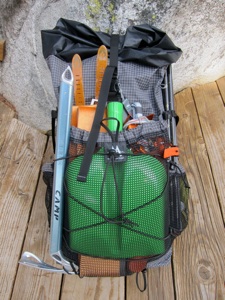
The last new piece of gear that I’m excited to try out is Mountain Laurel Designs full suspension Exodus pack. Keeping overall pack weight down, while still being able to carry comfortably can be a challenge, especially when you add in avi gear, winter apparel, ski gear and long food carries. I had the same challenges during my unsupported CT speed hike last fall when I was carrying a 6lb base weight, but 40lbs of food at the start. For that trip I utilized Granite Gear’s Crown pack with an integrated Klymit’s Airbeam suspension with great success. I really loved the carrying capabilities of the Airbeam frame and was excited when MLD starting using Klymit’s system in their Exodus pack about 2 years ago. I won’t see nearly the same total pack weights that I saw on the Colorado Trail, but I’m estimating my starting weight to be around 32-35lbs, with 7 days of food and a 15lb base weight. At a hair over 26oz the Exodus FS has all the conveniences of a ultra-light pack and the carrying capabilities of a modern suspension pack.
For a full gear list on what I’ll be using for this trip click here: Sierra Ski Traverse Gear List.xlsx
Fish scales on a pair of mid-fat Voile Vector BC skis. 118-94-107 and 1460g under foot. The secret to ultra-light ski touring for all conditions.
Dynafit Low Tech Race bindings. 7.4oz and with an effective DIN setting of 9. About as simple and light as you can get. Thank you Austrian engineering!
Trail Design’s multi-fuel Sidewinder stove system can handle alcohol, wood and esbit. Beautiful craftsmanship and proved efficiency with their Caldera Cone design.
(left) In wood burning mode
Sidewinder Ti-Tri stowed nicely inside the Vargo 1.3Ti pot. Nice touch with the tyvek sleeves to separate the soon to be sooty windscreen from the rest of the pot. Note, since this is my first time cooking with wood, I will be bringing Trail Design’s 12-10 alcohol stove for backup and the chance we camp above treeline.
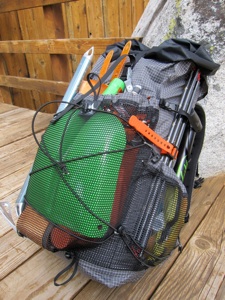
above: MD Exodus FS fully loaded minus food. All ski gear that I will need to get to readily during the day (shovel, probe, skins) is neatly stowed on the outside, while the remainder of my camping gear fits snugly inside the 2900ci main compartment.